What Is a Tri-Proof LED Light?
Understand how tri-proof LED lights protect against water, dust, and corrosion, where they are used, and how to select the right IP-rated fixture.
A Practical Definition of Tri-Proof LED Lighting
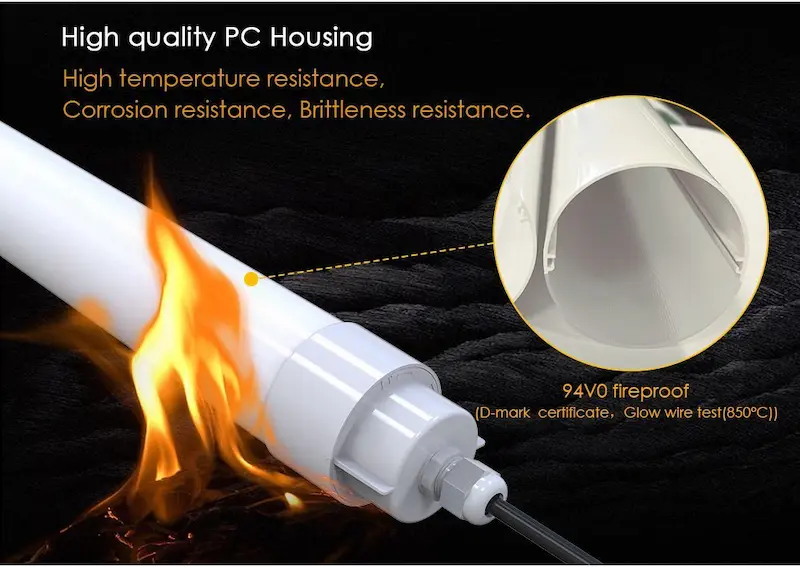
A tri-proof LED light is a commercial or industrial fixture designed to resist three common environmental risks: water, dust, and corrosion. The protection is created through a sealed housing, suitable protective materials, and a sealing ring that helps limit the entry of moisture and particles.
Compared with an indoor-only fitting, a tri-proof fixture is intended for demanding areas such as wet rooms, workshops, warehouses, parking areas, food processing facilities, and other spaces where ordinary luminaires may be exposed to moisture, dust, impact, or cleaning conditions.
Where to Use Tri-Proof LED Lights
Tri-proof fixtures are useful when lighting must remain dependable in wet, dusty, corrosive, or frequently cleaned areas. Common applications include:
Wet and Transit Areas
Viaducts, overpasses, tunnels, car wash stations, subways, and airports can expose luminaires to water, humidity, or spray.
Industrial and Chemical Sites
Steel plants, petrochemical plants, food processing plants, farms, toilets, and docks may combine moisture with dust or corrosive agents.
Commercial and Service Spaces
Libraries, parking lots, basements, warehouses, workshops, supermarkets, and school corridors benefit from a sealed, practical fixture format.
Why the Housing and Seal Matter
Tri-proof performance depends on more than the LED module. The housing, sealing ring, cable entry, diffuser, and assembly method all influence how well the fixture limits dust and moisture entry. ShineLong uses protective materials and surface treatments suited to the intended working environment, including nano-spraying plastic damp-proof and anticorrosive treatment on the lamp protection box.
This construction approach helps the fixture handle the practical conditions found in industrial and commercial spaces while maintaining useful illumination and low power consumption.
How IP65 to IP69K Ratings Work
The IEC developed the IP, or Ingress Protection, rating system to classify how an electrical product resists the entry of solids and water. Tri-proof LED lights commonly use IP65, IP66, IP67, IP68, or IP69K ratings.
Example: IP65 uses two numbers to describe two different protections.
The larger number generally indicates a higher level within that part of the rating system, but the correct selection still depends on the real installation environment and the applicable test conditions.
First Number: Solid and Dust Protection
- 0: No protection.
- 1: Protection against large solids.
- 2: Protection against medium solids.
- 3: Protection against small solids.
- 4: Protection against solids larger than 1 mm.
- 5: Protection against harmful dust accumulation.
- 6: Complete protection against dust entry.
Second Number: Water Protection
- 0: No protection.
- 1: Vertical water drops do not affect normal work.
- 2: Water drops when the enclosure is tilted up to 15 degrees.
- 3: Water or rain from a 60-degree angle.
- 4: Liquid splashed from any direction.
- 5: Water jets from any direction.
- 6: Conditions suitable for use on a ship's deck or similar water exposure.
- 7: Short-time immersion, typically up to 1 m under defined conditions.
- 8: Long-time immersion under defined pressure and conditions.
- 9K: High-temperature, high-pressure water jets, such as those used in demanding washdown environments.

What Does Anti-Corrosion Mean in a Tri-Proof Light?
Petroleum, chemical, metallurgy, light-industry, and animal-feed environments may contain acid, alkali, or salt, as well as humidity and high temperatures. In these areas, the fixture must be designed for more than ordinary indoor use.
An anti-corrosion tri-proof light needs appropriate sealing measures and corrosion-resistant materials. For example, animal waste can produce ammonia, while sanitary cleaning liquids in food processing plants can contain corrosive sodium hydroxide. Acrylic or other special plastics may be selected to support the required anti-corrosion performance.
ShineLong recommends matching the housing and sealing design to the chemical, humidity, temperature, and cleaning conditions at the installation site.
Tri-Proof LED Light Options for Different Environments
ShineLong's tri-proof range covers PC, tubular, and aluminum-body formats with different IP ratings. Select the product family according to the installation conditions, mounting requirements, and desired protection level.

Utilee PC IP65 Tri-proof Lights
A practical sealed PC option for general commercial and industrial spaces.
View product
Gauls IP68 LED Tri-proof Light
Designed for applications requiring a higher level of water and immersion protection.
View product
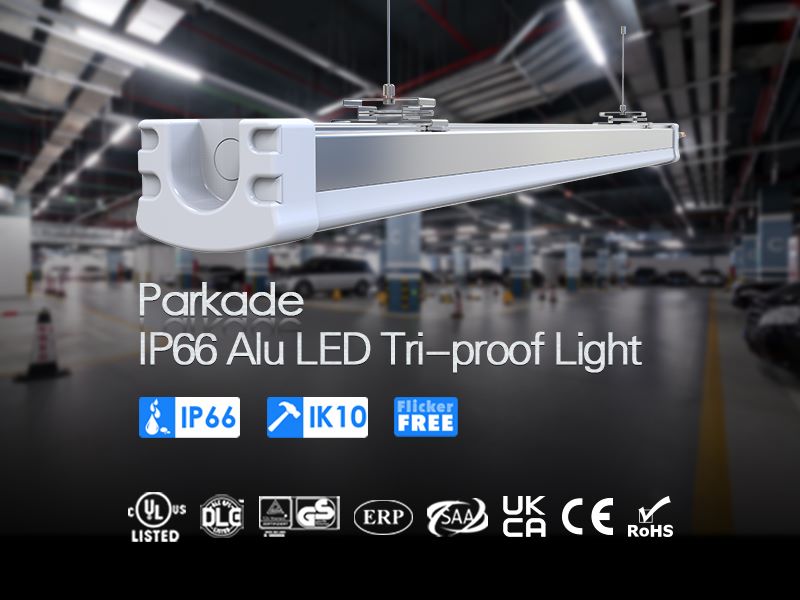
Parkade IP66 LED Tri-Proof Light
A sealed fixture option for parking and industrial areas exposed to dust and water jets.
View product
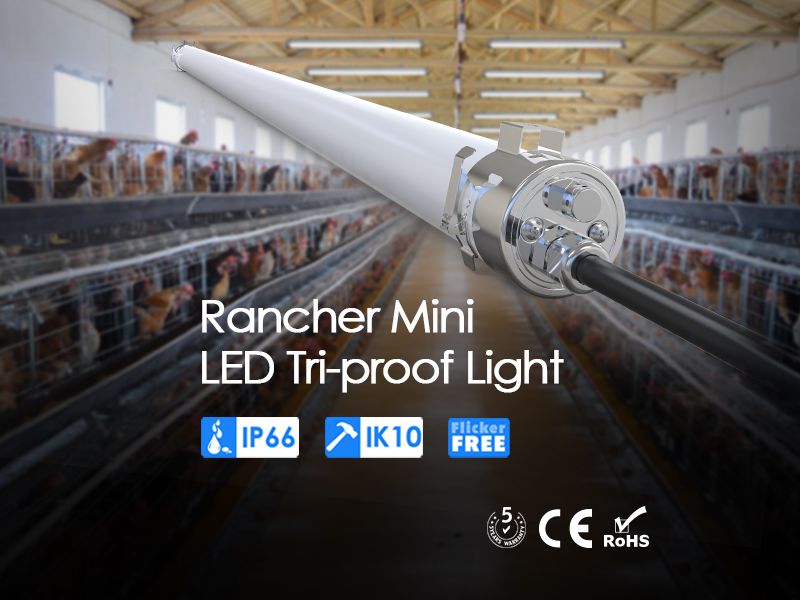
Rancher Mini Tubular Lights
A compact tubular format for installations that need a smaller fixture profile.
View product
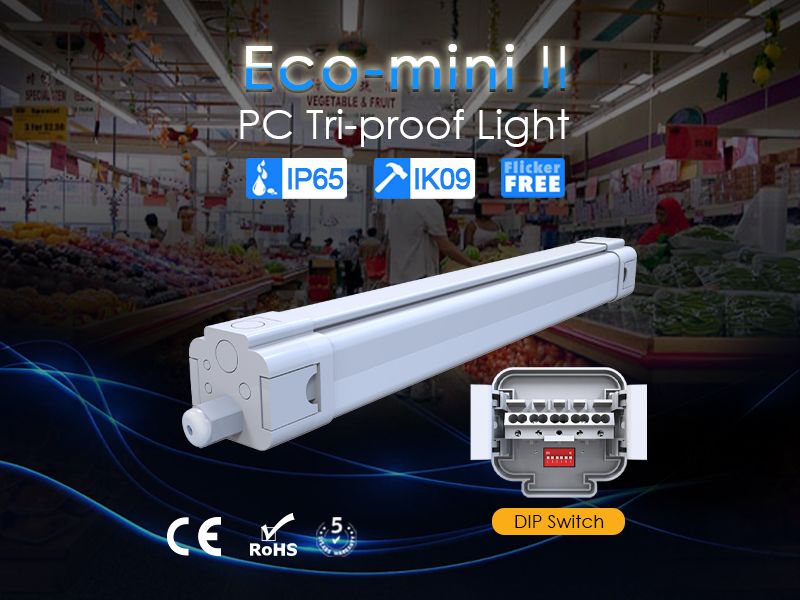
EcoMini IP65 Tri-proof LED Light
A compact PC housing for everyday commercial and industrial lighting layouts.
View product
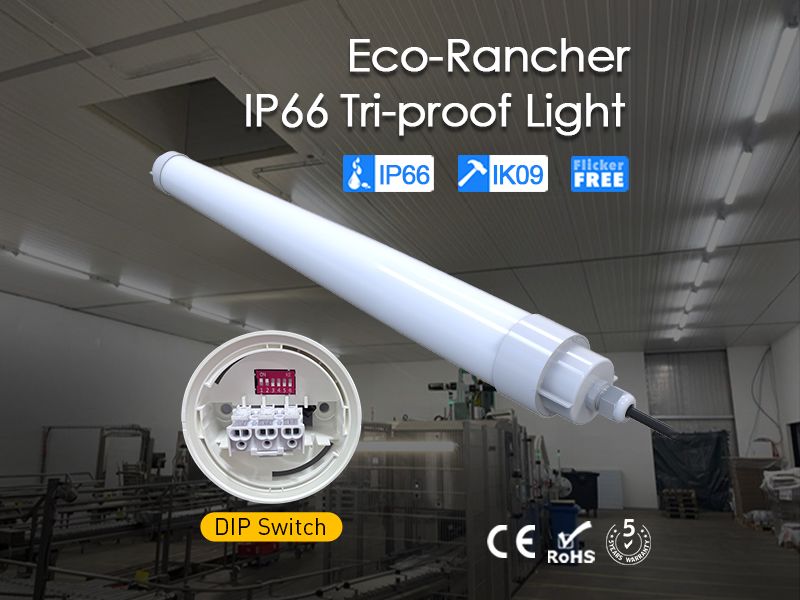
Eco-Rancher IP66 LED Tri-proof Light
An IP66 product family for demanding areas where dust and water resistance are important.
View productTri-Proof LED Light FAQs
Choose Protection for the Real Installation Conditions
ShineLong believes a tri-proof LED light should be selected from the environment outward: identify water, dust, corrosion, temperature, cleaning, and mounting conditions first, then match the IP rating and fixture construction. From ShineLong's perspective, a reliable tri-proof solution combines appropriate sealing and materials with efficient, maintainable illumination for the intended commercial or industrial space.
Need Help Choosing a Tri-Proof LED Light?
Share your installation environment, water or cleaning exposure, mounting method, and target lighting requirements with ShineLong. Our team can help identify a practical tri-proof LED light option.
Get a Customized SolutionLatest Articles
Loading latest articles...