
LED Lighting FAQs
Practical LED lighting answers about specifications, drivers, dimming, controls, IP ratings, IK ratings, certification, and supplier support.
LED Lighting Questions Buyers Ask Before Choosing Fixtures
LED lighting projects are easier to evaluate when the key terms are clear. Wattage, lumens, luminous efficacy, CRI, CCT, beam angle, driver type, dimming method, IP rating, and IK rating all affect how a fixture performs after installation.
This guide answers the questions buyers commonly ask when comparing commercial and industrial LED lights for warehouses, factories, parking garages, food processing areas, offices, supermarkets, and other project environments.
Most Asked by LED Lighting Buyers
If you are comparing LED fixtures for a real project, start with these buyer questions before checking detailed technical terms.
Visual Reference for LED Lighting Terms
These visuals help connect common LED lighting terms with real components, color data, sealing parts, sensors, and electrical systems.
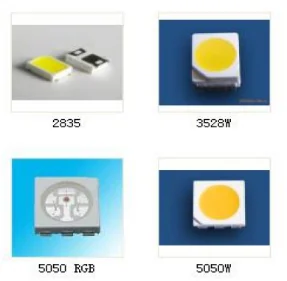
LED Packages
LED package selection affects fixture layout, power design, heat management, and optical performance.
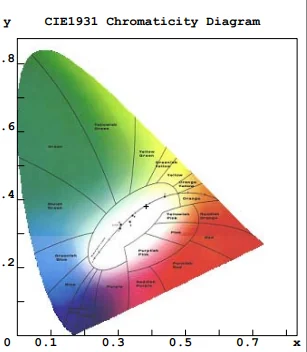
Color Consistency
CIE color data, CCT, CRI, and SDCM help buyers evaluate color quality and batch consistency.
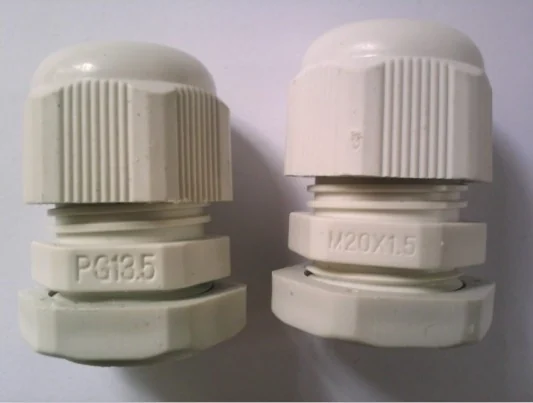
Sealing Parts
Waterproof connectors, housing materials, and sealing design support IP-rated LED fixtures.
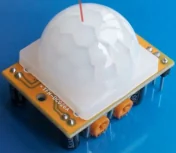
Sensor Control
Motion sensing can reduce energy use in corridors, parking areas, warehouses, and public spaces.
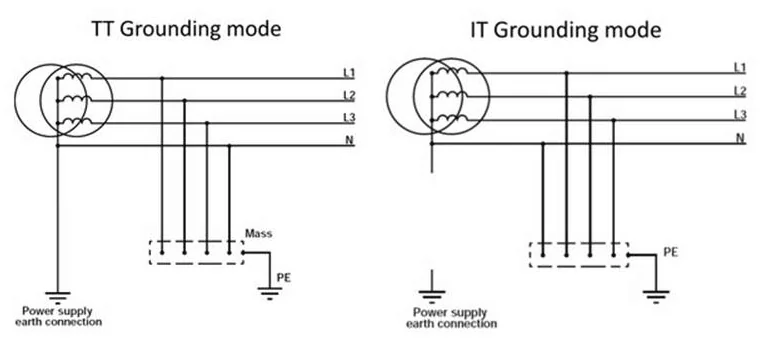
Electrical Systems
Input voltage, grounding, wiring, and driver design should match the target market and installation site.
LED Basics: Terms Buyers Should Understand
These FAQ answers explain common LED lighting specifications used in quotations, datasheets, IES files, and project discussions.
Drivers, Dimming & Controls
LED driver and control compatibility affects safety, flicker, dimming performance, maintenance, and lighting system reliability.
IP Rating, IK Rating & Application Environments
Protection ratings help buyers select fixtures for dust, moisture, washdown, impact, corrosion, and harsh installation environments.
Technical Reference Tables
Use these quick tables when comparing LED specifications, protection ratings, dimming methods, and quality-control documents.
IP Rating: First Digit for Solids
| Digit | Meaning |
|---|---|
| 0 | No special protection. |
| 1-2 | Protection against larger objects and fingers. |
| 3-4 | Protection against tools, wires, and small solid objects. |
| 5 | Dust protected; limited dust ingress allowed. |
| 6 | Dust tight; highest solid protection level. |
IP Rating: Second Digit for Water
| Digit | Meaning |
|---|---|
| 0 | No special water protection. |
| 1-2 | Protection against vertically or angled dripping water. |
| 3-4 | Protection against spraying and splashing water. |
| 5-6 | Protection against water jets or powerful water jets. |
| 7-8 | Protection against temporary or continuous immersion under defined conditions. |
| 9K | Protection against high-pressure, high-temperature washdown. |
Common Dimming and Control Methods
| Method | Typical use |
|---|---|
| 0-10V / 1-10V | Commercial dimming systems and larger lighting projects. |
| DALI | Digital lighting management, addressing, feedback, and control. |
| TRIAC | Phase-cut dimming projects where compatible drivers are required. |
| CCT control | Tunable white or color temperature adjustment. |
| Microwave / PIR | Occupancy or motion-based energy saving. |
Quality-Control Tests Buyers May Request
| Test | What it checks |
|---|---|
| High-voltage test | Electrical insulation and safety performance. |
| Aging test | Stable operation before shipment. |
| Integrating sphere | Power, lumens, CRI, CCT, PF, and related optical/electrical data. |
| IES test | Light distribution, beam angle, photometric data, and lighting simulation support. |
| Visual inspection | Appearance, labeling, assembly, packaging, and batch consistency. |
Custom Project Development Process
Actual timelines depend on project complexity, specifications, certification requirements, tooling, samples, approval, and production schedule.
LED Tri-Proof Lights: 10 Questions Buyers Ask
What does “Tri-proof” mean in LED lighting?
In ShineLong’s guides, tri-proof describes protection against water, dust and corrosion. Check IP protection, material compatibility and the assembled product documentation separately. Impact is assessed through the IK rating, and ordinary tri-proof lighting is not automatically explosion-proof.
What is the difference between IP65, IP66, and IP69K tri-proof lights?
IP65 covers water jets, IP66 covers powerful water jets, and IP69K addresses high-pressure, high-temperature washdown under the declared test. Select the rating from the actual cleaning exposure. Chemical resistance, impact, immersion and ambient-temperature suitability require separate checks.
What is the difference between PC material and PMMA for tri-proof lights?
For Rancher, the PC housing option is positioned for UV resistance and PMMA for corrosion resistance. Frosted PC lists 130/145 lm/W and frosted PMMA 135/150 lm/W for standard/premium versions at 4000K and 25°C, with ±10% efficacy tolerance. Confirm the actual cover, chemical exposure and complete-fixture impact test.
What is the difference between Vapor Tight Light and Tri-proof Light?
These are overlapping product descriptions rather than universal protection grades. Alpha is named vapor-tight with IP65 protection; other ShineLong tri-proof families use different IP ratings and materials. Compare the exact model’s IP, IK, housing, voltage and approval scope rather than selecting by the name alone.
Which LED tri-proof light is best for food processing plants or cold storage?
For demanding washdown, evaluate Rancher IP69K against the site’s cleaning chemistry and required documents. Cold storage needs a separate temperature check: Rancher, Rancher Mini, Parkade and EcoMini II standard versions operate from −20 to +40°C. A −40°C freezer needs a separately confirmed configuration. Standard Rancher CRI is above 80; higher-CRI inspection options need confirmation.
How do I choose tri-proof lights for poultry farms or livestock facilities?
Specify ammonia and cleaning exposure, housing and seals, required IP/IK evidence, the animal-lighting schedule, dimming protocol and measured flicker performance across the required range. Rancher offers PC/PMMA and configurable controls, but a generic corrosion-resistant or flicker-free description does not establish every farm condition or dimming setting.
Are your tri-proof lights linkable or easy to install?
Selected versions support linking and quick-access features. Parkade documents a tool-free end-cap option; Rancher and Parkade provide voltage-specific linking tables. For 60W versions, the tables list 15 units at 230V EU, 5 at 110V US and 13 at 277V US. Confirm the actual connector, cable and lower applicable circuit limit.
What is the lumen efficiency and warranty of your tri-proof lights?
Efficacy depends on the series and cover. Alpha lists 135/150 lm/W frosted or 140/155 striped; Parkade lists 135/145 frosted or 140/155 striped; Rancher lists 130/145 frosted PC or 135/150 frosted PMMA. These standard/premium values are at 4000K and 25°C with ±10% efficacy tolerance. Standard warranties are 5 years; Parkade emergency documentation separately states a 3-year guarantee.
Can tri-proof lights be integrated with motion sensors or emergency drivers?
Selected configurations support these functions. Parkade emergency examples list 3W output for 20/30/40W XB models and 8W for 50/60W XB models, with a 3-hour emergency indication. Rancher lists 3W emergency examples with a 6.4V 1800mAh battery. Confirm model, market version, control compatibility, emergency runtime and battery temperature requirements.
How many tri-proof lights do I need for a warehouse or garage project?
Estimate N = ceil(E × A / (Φ × UF × MF)), where E is target maintained lux, A is area, Φ is lumens per fixture, UF is utilisation factor and MF is maintenance factor. Then verify mounting height, rack shadows, uniformity and the working plane in DIALux or equivalent software. Send drawings, dimensions and target lux for a project review.
Explore the Tri-Proof Selection Guides
Protection
Compare water-jet and washdown requirements.
Housing
Review PC, PMMA and chemical-exposure requirements.
Project support
Compare efficacy, warranty, sensor and emergency options.
For fixture quantity, use the lighting calculator.

Frequently Asked Questions about ShineLong LED Lights
This section focuses on public supplier capability, customization, testing, documentation, and project support from ShineLong.
Conclusion: How to Use These LED Lighting FAQs
LED lighting selection should not depend on one specification alone. A reliable decision should consider lumens, wattage, lm/W, CRI, CCT, SDCM, beam angle, driver compatibility, dimming method, IP rating, IK rating, installation environment, certification, and supplier quality control.
Use these shared principles first, then review product-specific details for tri-proof lights, panel lights, tube lights, emergency options, sensor functions, and application scenarios according to the actual project requirement.
For project selection, ShineLong recommends confirming drawings, environment, target brightness, control method, compliance needs, maintenance expectations, and budget before finalizing LED fixture specifications.
Need LED Lighting Technical Documents?
Send ShineLong your product type, application scenario, certification market, and project requirements. Our team can provide suitable technical documents for review.
Request Technical DocumentsLatest Articles
Loading latest articles...