Rancher IP69K Food Processing Lighting
Choose food-factory lighting by washdown exposure, material compatibility, colour requirements and the documented temperature range.
Which Tri-Proof Light Fits a Food-Processing Plant?
For a food-processing plant, choose a tri-proof light by the cleaning exposure of each zone, the required colour quality and the documented operating conditions. Rancher IP69K is an option for demanding washdown areas when the ordered housing, controls and approval documents match the project.
The standard Rancher configuration lists CRI above 80 and an operating range of −20 to +40°C. Inspection tasks requiring a higher CRI, or freezers operating below −20°C, need separate configuration confirmation.
Use the food industry lighting guide to define the zone before selecting the luminaire.
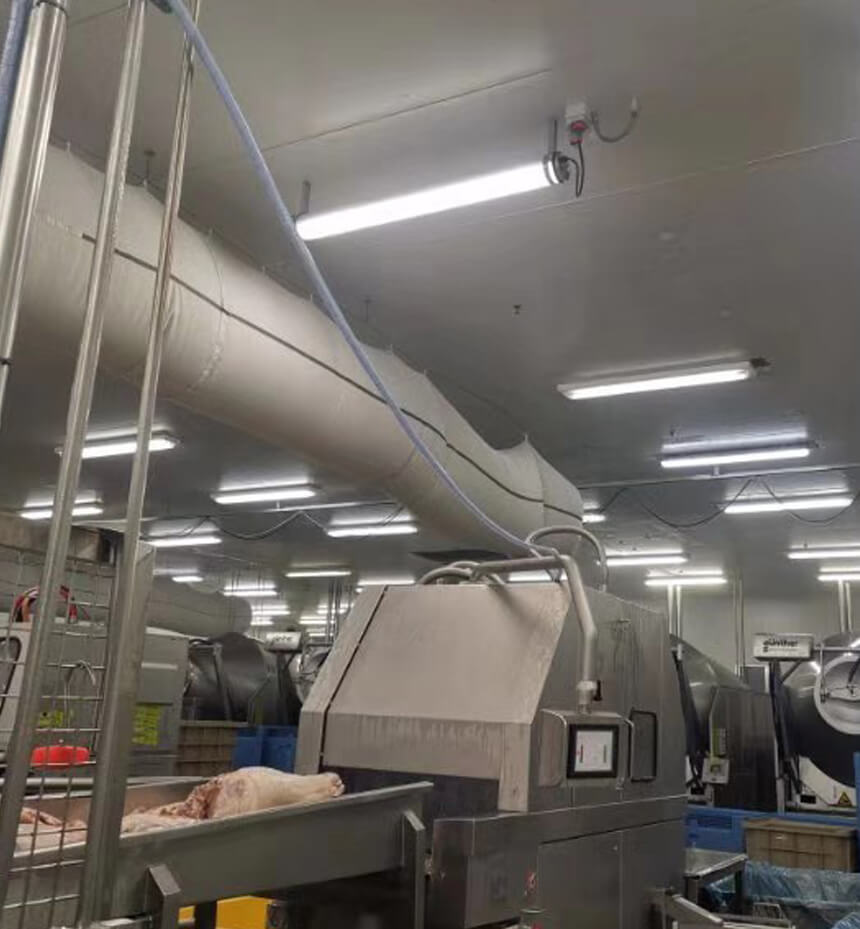
Why Evaluate Rancher IP69K for Food-Processing Washdown Areas?
Match the washdown test
IP69K addresses demanding high-pressure, high-temperature water jets under its declared test. Confirm the test report and real cleaning procedure.
Choose the material system
PC and PMMA options serve different selection priorities. Review housing, diffuser, gaskets, cable entries and S316 components together.
Verify the food-zone documents
If NSF listing is specified, verify the full model and zone against the current listing. IP69K and a certificate logo are not substitutes for that review.
Use the food-factory lighting verification checklist when reviewing the model-specific submittal.
Which Rancher Specifications Should Food-Plant Buyers Check?
| Specification item | Standard Rancher EU / US reference | Selection implication |
|---|---|---|
| Ingress / impact | IP69K; IK10 stated for the series. | Confirm report coverage for the assembled model and cover. |
| Housing / components | PC or PMMA housing; aluminium board; S316 components. | Match material and seals to the detergent and exposure. |
| Colour rendering / beam | CRI >80; nominal 120° beam. | Request a higher-CRI option for colour-critical inspection and verify photometry. |
| Efficacy versions | Frosted PC: 130 / 145 lm/W; frosted PMMA: 135 / 150 lm/W. | Standard / premium; 4000K, Ta=25°C, ±10% efficacy tolerance. |
| Lifetime reference | L80B10: 50,000 hours at Ta=25°C. | Lumen-maintenance reference, not the warranty duration. |
| Standard ambient range | −20 to +40°C. | Do not specify the standard configuration for a −40°C freezer. |
| Standard warranty | 5 years. | Confirm emergency-kit and battery terms separately. |
| Market version | EU: 200–240V; US: 100–277V, 50/60Hz. | Match voltage and model-specific destination-market documentation. |
Values are nominal standard / premium efficacy versions at 4000K and 25°C ambient. The listed efficacy and wattage tolerances are ±10%. For CRI above 90, the specification notes a 10–15% efficacy reduction. Confirm the exact SKU, cover, driver and photometric file; a family-level efficacy option does not establish every model’s delivered lumens.
How Should Lighting Differ Across Food-Processing Zones?
Rancher supports each stage of food production, from raw material handling to final packaging and cold storage.

Raw Material Handling and Pre-Processing
Record water, debris and cleaning exposure before selecting housing and seals. Match lumens and distribution to the actual work surface.
Its sealed polycarbonate body keeps moisture and contaminants out, while luminous efficacy up to 160 lm/W supports clear and uniform lighting.

Cutting, Sorting, and Inspection Areas
Specify the CRI and maintained illuminance required for product assessment. Standard CRI >80 does not confirm a CRI >95 inspection configuration.

Packaging and Sealing Rooms
Review cleanability, exposed product, mounting and loose-part risks. Select protection for the room’s actual cleaning process.
Cleanliness is critical in packaging areas. Rancher is glass-free and made with shatterproof materials, reducing contamination risk from broken parts.
With 4kV surge protection and food safety lighting design, it supports kitchens, food processing rooms, and cold storage areas.

Cold Storage and Freezer Environments
Extreme cold can cause conventional lights to fail or delay startup. Rancher operates from −20 to +40°C celsius without flickering or warm-up time.
For project-specific context, see ShineLong's cold storage lighting solutions guide.

Washdown Zones and Sanitation Corridors
Food processing facilities are cleaned frequently with hot water and chemicals. Rancher's seamless body and corrosion-resistant materials suit these harsh conditions.
Its IP69K protection helps provide reliable washdown-ready lighting for food-grade environments.
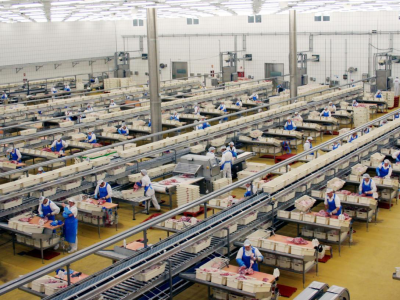
Loading Docks and Outdoor Corridors
Rancher is built with IK10 impact resistance and vibration-proof design for demanding environments, rough handling, frequent movement, and outdoor exposure.
Its 120-degree beam angle supports broad light coverage, while optional smart controls such as motion sensing or programmable scheduling help reduce operating cost.
Review the Rancher IP69K Configuration
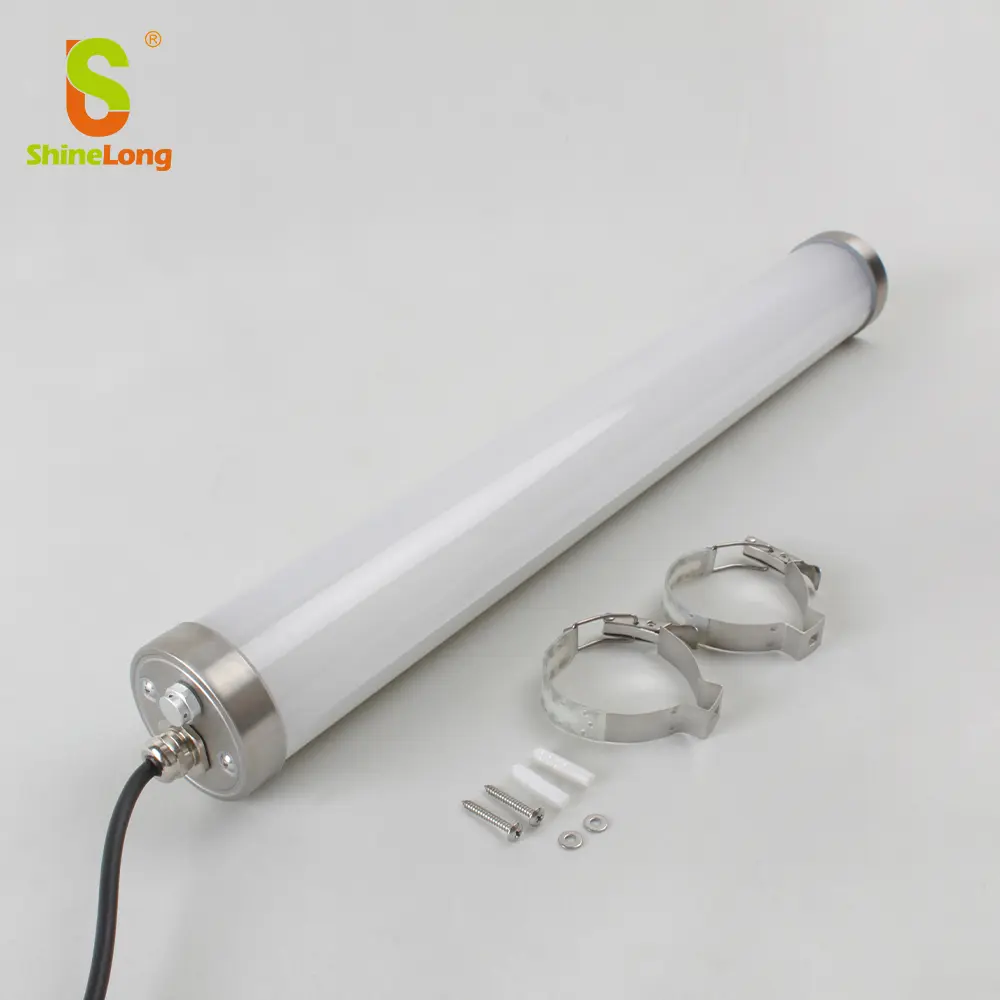
Rancher combines a tubular enclosure, PC or PMMA housing options, S316 components and configurable electrical functions. Select the actual cover, wattage, CCT, controls and connection arrangement before requesting approval documents.
Review Rancher IP69K product details and confirm the quoted configuration.
Food-Processing Tri-Proof Lighting FAQs
Which LED tri-proof light should I consider for food-processing washdown zones?
Rancher IP69K is an option to evaluate for high-pressure, high-temperature washdown areas. Confirm the exact enclosure material, seal system, cleaning chemistry, test report and applicable food-facility documentation for the installation zone.
Does every food-processing room require IP69K?
No. Select the ingress rating by the cleaning exposure of each room. Dry packaging, wet processing and intensive washdown zones can have different requirements; an IP rating alone does not prove hygienic suitability or chemical compatibility.
Is standard Rancher suitable for colour-critical inspection?
Standard Rancher lists CRI above 80. If the inspection specification needs CRI above 90 or 95, request that configuration and its measured light output. Do not assume a higher CRI is included in every Rancher model.
Can standard Rancher be used in a −40°C freezer?
The May 2026 standard Rancher specification lists −20 to +40°C, so it does not establish suitability for −40°C operation. A lower-temperature project needs a separately confirmed luminaire, driver, seals, cable and emergency-battery configuration.
How should food plants assess breakage and contamination risks?
Review the enclosure material, impact report, retention of parts, cleanability and applicable hygienic approval scope for the exact model. A plastic cover or an IK rating does not make the luminaire unbreakable or establish every food-zone approval.
Does an IP69K rating also certify NSF suitability?
No. IP69K concerns ingress protection under the stated washdown test. If NSF listing is required, match the full model designation and installation zone to the applicable current listing and project documents.
Specify the Fixture for the Project
ShineLong recommends specifying food-processing lighting by zone: cleaning exposure, material compatibility, colour requirements, temperature and documented model scope. A suitable washdown luminaire must satisfy the complete project specification.
Request a Food-Processing Lighting Configuration
Send the installation zone, cleaning chemistry, water pressure and temperature, minimum ambient temperature, mounting height, target lux, CRI and required approval documents.
Request Technical DocumentsLatest Articles
Loading latest articles...