Cold Storage Lighting Solutions
Match cold-room lighting to its temperature range, condensation exposure, cleaning process and required control configuration.
Which Lighting Conditions Matter Most in Cold Storage?
Start with the lowest and highest temperatures at the fixture, not only the nominal room setpoint. Then review condensation, defrost cycles, cleaning, distribution and maintenance access.
Rancher, Rancher Mini, Parkade and EcoMini II operate from −20 to +40°C in their standard configurations. A freezer below this range needs separately confirmed equipment; the IP rating does not extend the operating-temperature rating.
Review food-facility lighting requirements where cold storage forms part of a food-processing site.

What Can Make Cold-Storage Lighting Fail?
Temperature extremes
Confirm cold-start and continuous-operation limits. For below −20°C projects, request a separate low-temperature specification.
Condensation and defrost
Record temperature cycling, humidity and defrost conditions. Review the enclosure seals, pressure balance and cable-entry arrangement.
Cleaning exposure
Specify water pressure, temperature, chemicals and dwell time. IP protection and chemical resistance are separate checks.
Visibility and access
Plan light on working planes and rack faces, with glare control and safe access for servicing.
What Should a Cold-Storage Lighting Specification Include?
When selecting LED lighting for cold storage, you can base your decision on five key factors: temperature, ingress/impact protection, materials, light distribution, and controls/emergency features, streamlining your project review and procurement process.
| Selection point | What to confirm |
|---|---|
| Temperature | Ambient minimum/maximum, cold-start conditions and separately documented operation below −20°C. |
| Ingress / impact | Required IP and IK tests for the exact assembly; washdown and immersion are different exposures. |
| Materials | Housing, diffuser, gaskets and hardware compatibility with detergents and any ammonia exposure. |
| Light distribution | Maintained illuminance, uniformity, rack geometry, mounting height and luminaire photometry. |
| Controls / emergency | Sensor coverage, hold time, standby level, emergency output, runtime and battery temperature limits. |
Which Standard ShineLong Models Can Be Evaluated for Cold Rooms?
Explore four rugged ShineLong LED tri-proof lighting solutions tailored for freezer rooms, cold storage, food and pharma facilities, and humid processing environments.
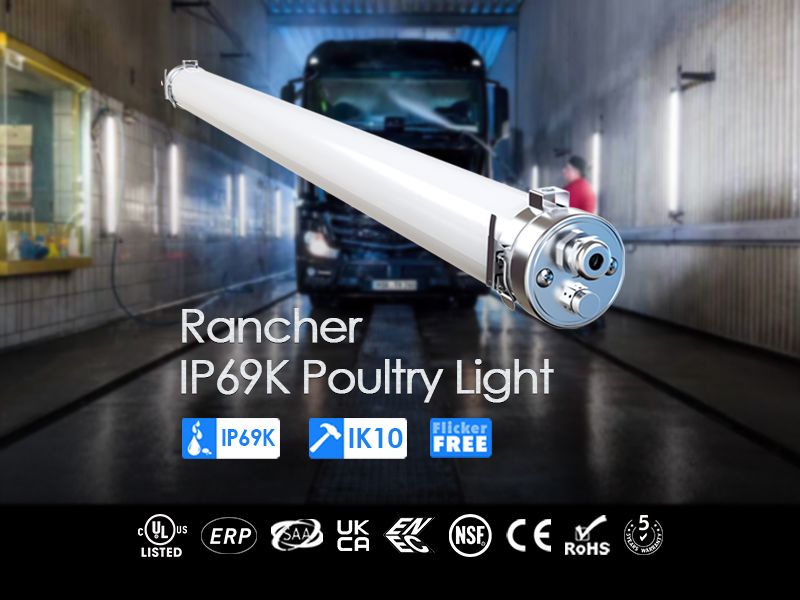
Rancher IP69K Tri-proof Light
For meat storage and pharmaceutical-grade cold rooms requiring high protection against water, dust, chemicals, and washdowns.
Recommended for: meat storage, pharmaceutical cold rooms. Operating range: -40℃ to +55℃.View product
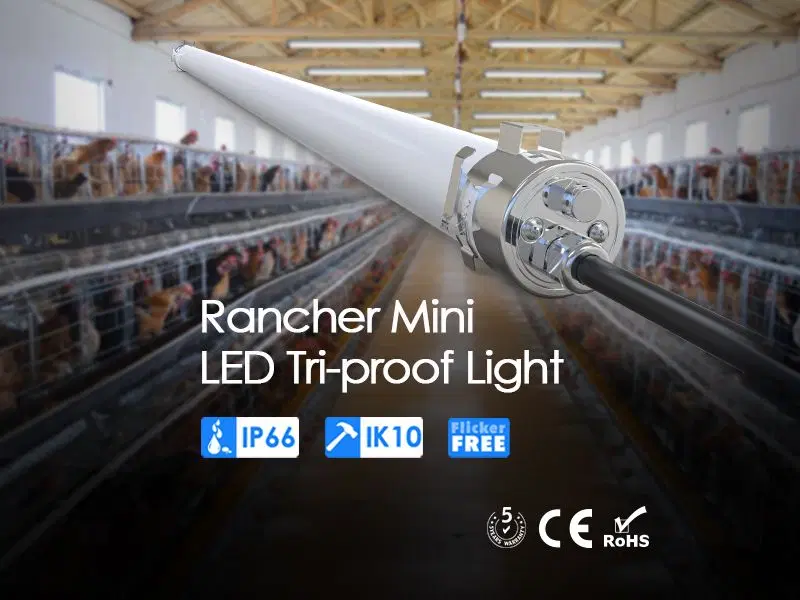
Rancher Mini IP66 LED Tri-proof Light
For humid refrigerated warehouses and seafood processing spaces where condensation and water exposure are constant risks.
Recommended for: seafood processing, humid freezer environments. Operating range: -40℃ to +50℃.View product
Parkade IP66 Tri-proof Light
Flexible and economical option for general cold storage areas that need moisture and dust protection with quick installation.
Recommended for: general cold storage warehouses. Operating range: -20℃ to +45℃.View product
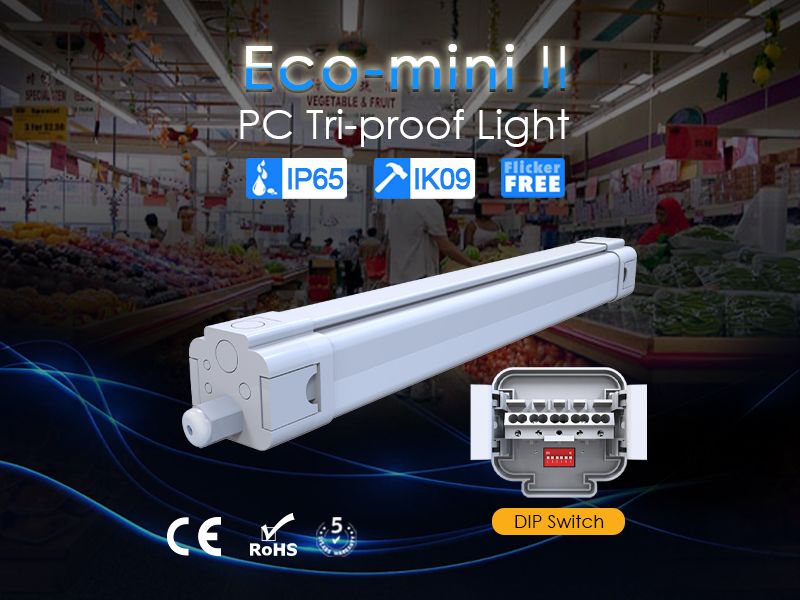
EcoMini LED Tri-proof Light
Compact and efficient choice for corridors, entrances, small prep rooms, and auxiliary zones in cold facilities.
Recommended for: corridors, auxiliary areas, compact zones. Operating range: -20℃ to +45℃.View productHow Can a Verified Cold-Room Lighting Upgrade Help?
Useful visibility
A photometric layout can address picking tasks, rack shadows and safe movement.
Maintainable operation
Temperature-compatible parts and accessible mounting support a practical maintenance plan.
Controlled energy use
Appropriate efficacy and compatible controls can reduce unnecessary operating hours and power.
For related washdown selection, read the Rancher food-processing lighting guide.
Cold-Storage Lighting FAQs
Which LED tri-proof light is suitable for a cold room?
Choose a model whose documented temperature range covers the actual ambient conditions, then match ingress protection and materials to condensation and cleaning. Rancher, Rancher Mini, Parkade and EcoMini II operate from −20 to +40°C in their standard configurations.
Can a standard −20°C-rated light be used in a −40°C freezer?
The standard specification does not establish suitability below −20°C. Request a separately documented low-temperature configuration and confirm cold starting, seals, cable entries, driver and any emergency-battery requirements.
Does every cold room need IP69K?
No. IP69K should be selected where the cleaning process requires demanding high-pressure, high-temperature washdown. Other zones may need different ingress protection. The temperature rating and chemical compatibility must be checked separately.
Does a high IP rating prevent every condensation problem?
No. Temperature cycling, cable entries, seals, pressure balance and installation affect moisture control. Review the complete fixture and maintenance procedure for the cold-room environment.
Can I use motion sensors or emergency batteries in cold storage?
Selected configurations can provide these functions, but the sensor, driver and battery must be suitable for the actual ambient temperature and operating sequence. Standard luminaire temperature data does not by itself establish battery charging or emergency-runtime performance.
How can cold storage LED lighting reduce energy use?
Select the required delivered light output with appropriate efficacy, then use compatible controls where the operating task permits. Estimate savings from the existing load, proposed load, operating hours and actual dimming schedule.
Specify the Fixture for the Project
ShineLong recommends approving cold-storage lighting from the operating conditions outward: temperature, condensation, cleaning, materials, light distribution and controls. Verify the final configuration before treating a standard tri-proof fixture as a freezer luminaire.
Request a Cold-Storage Lighting Review
Send room dimensions, mounting height, minimum and maximum temperature, defrost cycle, cleaning method, target lux, control needs and emergency requirements.
Get a Customized SolutionLatest Articles
Loading latest articles...