Home > Blogs > LED Lighting Guide > 5 Minutes to Let You Know SDCM
LED COLOR CONSISTENCY GUIDE

5 Minutes to Let You Know SDCM

Understand what SDCM means, why LED color consistency matters, and how ShineLong controls LED color uniformity.

What Is SDCM?

Standard Deviation of Colour Matching (SDCM) measures the color consistency of LED light sources. It shows how much actual color coordinates deviate from the target color point.

The smaller the SDCM value, the more uniform the light color appears. This is especially important when multiple panel lights are installed together.
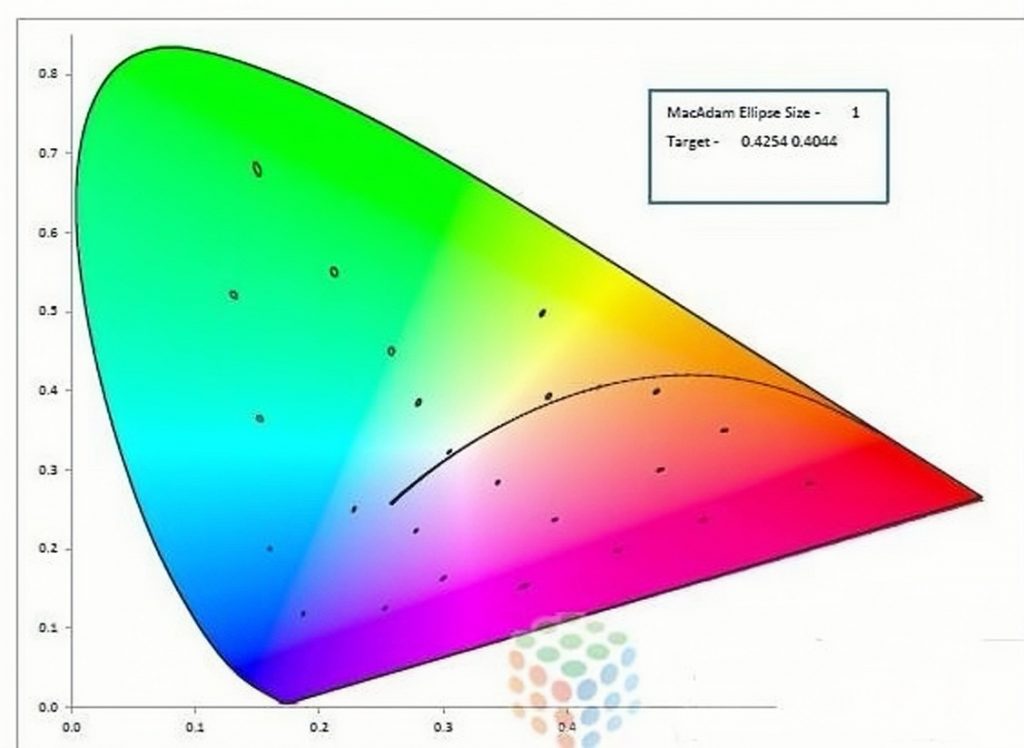
SDCM LED MacAdam ellipse
SDCM is commonly explained through MacAdam ellipses.
Lower Is BetterLower SDCM means less visible color difference.
3-Step Target3-step is a key visual threshold.
Batch ControlLED binning helps maintain consistency.
Project QualityUniform color protects commercial interiors.

MacAdam Ellipses and SDCM in Lighting

MacAdam Ellipses Definition

Within a MacAdam ellipse, subtle shifts in color may be difficult for the human eye to detect. Once color coordinates fall outside the ellipse, differences become easier to notice.

MacAdam ellipses are described by steps. A 1-step ellipse is very small; 3-step, 5-step, and 7-step ranges represent wider color tolerance.

What Is SDCM in Lighting?

Within the 3-step MacAdam ellipse, color difference is almost invisible to the human eye. 5-step and 7-step ellipses show more noticeable variation.

For LED lighting, lower SDCM keeps fixtures visually consistent.

Factors Affecting SDCM

  • Structure: light guide plate, reflective paper, and diffuser design.
  • Heat dissipation: poor thermal control can cause color shift.
  • LED forward current: unstable current can influence color temperature.

CRI vs. SDCM

CRI measures how accurately a light source reveals object colors. SDCM measures color consistency between light sources. CRI is color accuracy; SDCM is color uniformity.

SDCM Standards and Control Methods

TopicOriginal Article PointPractical Meaning
ANSI C78.376North American ANSI standard defines acceptable color tolerance for LED products.Helps judge whether LED color is acceptable, the color consistency of LED products must fall within SDCM ≤ 7.
IEC 60081 / ERPEuropean requirements are typically stricter.European projects may require higher precision, the color tolerance requirement is even stricter, typically SDCM ≤ 6.
LED binningShineLong uses strict LED binning and color consistency control.Better binning reduces visible batch variation.
TestingIntegrated sphere testing provides X/Y color coordinates.Data helps determine SDCM ellipse step.
Reducing SDCMTarget the center point and keep LEDs within tighter SDCM.Improves uniformity and natural light appearance.

SDCM Visuals, Standards, and Test Report

SDCM color consistency guide
SDCM step comparison

Step Applications

Step 1 indicates minimal color deviation, Step 3 is a common industrial standard, and Step 5 is used for lower-demand applications.

LED lighting SDCM standards
SDCM standards visual

Standard of SDCM

ANSI and IEC standards define acceptable color tolerance. ShineLong uses LEDs of corresponding standards according to different customer markets.

How to Read This Table

  • 3-step SDCM means tighter color consistency and is suitable for professional commercial lighting.
  • 5-step SDCM is acceptable for many standard lighting projects.
  • 7-step SDCM allows a wider color range and is usually used in lower-demand applications.

Color Temperature and SDCM Range

Different standards define slightly different CCT tolerance ranges. To improve readability, ANSI C78.376 and IEC 60081 are separated into two tables below, helping engineers compare 3-step, 5-step, and 7-step SDCM ranges more clearly.

For commercial LED panel lighting projects, a lower SDCM value usually means better color consistency across the ceiling, especially in offices, hospitals, schools, and retail spaces.

ANSI C78.376 CCT Range

CCT 3 Steps Tol. 5 Steps Tol. 7 Steps Tol.
2700K 2570–2780K 110 2630–2830K 200 2580–2880K 300
3000K 2970–3120K 150 2920–3170K 250 2870–3220K 350
3500K 3360–3560K 200 3300–3650K 350 3230–3730K 500
4000K 3860–4110K 250 3770–4220K 450 3680–4330K 650
5000K 4360–5210K 350 4750–5300K 550 4650–5450K 800
6000K 6308–6800K 500 6150–6950K 800 6050–7150K 1100

IEC 60081 CCT Range

CCT 3 Steps Tol. 5 Steps Tol. 7 Steps Tol.
2700K 2680–2790K 110 2640–2840K 200 2590–2890K 300
3000K 2865–3015K 150 2820–3070K 250 2770–3120K 350
3500K 3350–3550K 200 3280–3630K 350 3210–3710K 500
4000K 3910–4160K 250 3820–4270K 450 3740–4390K 650
5000K 4810–5160K 350 4720–5270K 550 4620–5420K 800
6000K 6200–6700K 500 6100–6900K 800 5950–7050K 1100

Note: “Tol.” means tolerance. Lower SDCM values generally indicate better color consistency for professional lighting projects.

SDCM test report
ShineLong SDCM test report

ShineLong LED Panel Light Test Report

ShineLong controls LED chip selection and production quality strictly. ShineLong uses one bin of LED chips for panel lights to keep color consistent across batches.

SDCM<3 Panel Lights support consistent commercial lighting projects.

FAQ About SDCM

What does SDCM mean?

SDCM means Standard Deviation of Colour Matching. It measures color consistency around a target color point.

Is lower SDCM better?

Yes. Lower SDCM means smaller visible color deviation and more consistent lighting.

What is the difference between CRI and SDCM?

CRI and SDCM describe two different aspects of light quality.
CRI (Color Rendering Index) measures how accurately a light source reveals the true colors of objects compared to natural light—the higher the CRI, the more natural the colors appear.
SDCM (Standard Deviation of Color Matching), on the other hand, measures color consistency between light sources; a lower SDCM value means less visible color variation.
In short, CRI relates to color accuracy, while SDCM relates to color uniformity.

Conclusion: SDCM Protects Visual Consistency

ShineLong believes SDCM should be checked before large LED lighting purchases, especially for panel light and commercial projects where multiple fixtures are viewed together.

From ShineLong's perspective, strict LED binning, reliable testing, and stable production control are essential for keeping light color consistent across batches.

Need LED Color Consistency Documents?

Send ShineLong your CCT, product type, installation layout, and SDCM requirement. Our team can help review suitable LED options.

Request Technical Documents

Latest Articles

Loading latest articles...

Leave a Comment

Your email address will not be published. Required fields are marked *

This site uses Akismet to reduce spam. Learn how your comment data is processed.

Scroll to Top

Request Technical Documents

Receive datasheets, certifications, testing reports, and other technical resources directly from our team.

Your information is secure and will never be shared with third parties.

Let's Get Started!

Download Resources

We will send the resources to your mailbox once you have finished the email form. No Spam.

Start Your Project Solutions

Tell us about your project needs, and our engineers will tailor a lighting plan for you within 24 hours.

Your information is secure and will never be shared with third parties.

Request Technical Pricing

Your information is secure and will never be shared with third parties.

Get Full Product Catalog

Please enter your professional business email address to instantly unlock the catalog file download. No Spam.