
LED UGR Explained: What It Is and Why It Matters for Lighting Comfort
Learn what UGR means, why glare affects visual comfort, and how to choose low-glare LED lighting for offices and indoor projects
When choosing LED lights for an office, classroom, hotel, retail store, or home interior, most people first compare brightness, color temperature, wattage, and energy efficiency. However, one important comfort factor is often missed: UGR, or Unified Glare Rating.
Understanding LED UGR helps lighting designers, contractors, and buyers choose lighting that is bright enough for the task while remaining comfortable for daily use.
What Is UGR in LED Lighting?
UGR stands for Unified Glare Rating. It is an international method developed by the International Commission on Illumination (CIE) to evaluate uncomfortable glare from indoor lighting installations.
In simple terms, UGR describes how likely a lighting setup is to cause visual discomfort. The value is usually shown on a scale from about 10 to 30. The lower the UGR value, the lower the glare and the more comfortable the lighting feels.
Unlike lumens, which measure light output, or color temperature, which describes whether light looks warm or cool, UGR focuses on the user experience. It considers the brightness of the light source, luminaire size, viewing position, room brightness, and optical design.
UGR is especially important for LED lighting because LEDs can produce strong, concentrated light from a relatively small emitting surface. Without proper optical control, this can create uncomfortable glare even when the lighting level appears suitable on paper.
UGR Rating Scale: What Do the Numbers Mean?
The UGR value helps compare how comfortable different lighting solutions are for indoor environments. The following ranges are commonly used in lighting design and project evaluation:
| UGR Value | Glare Level | Typical Applications |
|---|---|---|
| UGR < 10 | Almost no noticeable glare | Luxury hotels, galleries, premium bedrooms, high-comfort spaces |
| UGR 10-13 | Very low glare | Reading areas, home offices, boutique stores, hospitality interiors |
| UGR 13-16 | Low glare | Offices, classrooms, retail stores, study areas |
| UGR 16-19 | Acceptable glare for many workplaces | Conference rooms, waiting areas, general commercial interiors |
| UGR > 22 | Obvious glare | Not recommended for spaces where people stay for long periods |
For many office lighting, education, and commercial indoor projects, UGR ≤ 19 is a common design target. For higher-comfort spaces, lower values such as UGR ≤ 16 or UGR ≤ 13 may be preferred.
Why UGR Matters for LED Lighting Comfort
1. Lower UGR Helps Reduce Eye Strain
High-glare lighting forces the eyes to adapt constantly. Over time, this can lead to dry eyes, fatigue, headaches, and reduced visual comfort. Low UGR LED lighting creates a softer visual environment for offices, classrooms, hospitals, and other long-stay spaces.
2. Comfortable Lighting Supports Focus and Productivity
Glare can become a distraction even when users do not consciously notice it. A well-designed low UGR lighting system helps maintain a stable, comfortable visual environment for reading, computer work, and collaboration.
3. UGR Helps Projects Meet Lighting Standards
For commercial buildings, schools, hospitals, and public interiors, lighting comfort is often part of project acceptance. Specifying luminaires with suitable UGR performance helps reduce the risk of lighting complaints after installation.
4. Low Glare Improves the Look of the Space
Lighting is not only functional. It also affects how a space feels. High-glare fixtures can make an interior look harsh, while low-glare LED lights create a cleaner, softer, and more premium atmosphere.
How to Choose the Right UGR for Your Space
There is no single UGR value that fits every project. The right choice depends on the application, mounting height, room brightness, and how long people stay in the space.
Check the UGR Value on the Datasheet
Reliable LED panel light and linear light manufacturers usually provide UGR information in product specifications or photometric reports. When comparing products, check UGR together with lumen output, beam angle, efficiency, color temperature, CRI, and installation method.
Match the UGR Level to the Application
Choose this level where possible for relaxed, premium, or display-focused spaces that need very soft visual comfort.
A better comfort target for work, study, reading, and customer-facing interiors where people stay for longer periods.
Often acceptable for general commercial interiors when the lighting layout is balanced and glare is properly controlled.
Avoid high-glare fixtures in spaces where people work for hours, as discomfort can affect focus and visual health.
Look for Anti-Glare Optical Design
Low UGR performance usually comes from good optical engineering, including product choices such as K-lens DALI control LED linear lights, micro-prismatic diffusers, recessed light sources, anti-glare louvers, wide light distribution, and high-quality lens or reflector design.
Related LED Lighting Solutions
For projects where visual comfort matters, start with fixture families that can support controlled glare, even light distribution, and stable installation performance.
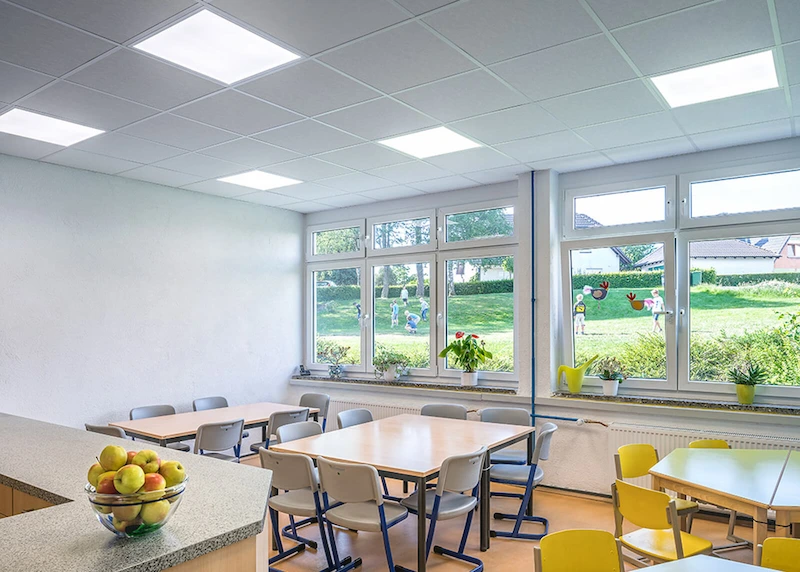
LED Panel Lights
Suitable for offices, classrooms, healthcare spaces, and other indoor areas where soft, even lighting and low glare are important.
View Product
LED Linear / Tube Lights
Useful for continuous lighting lines, corridors, work areas, and commercial interiors that need clean light output and efficient installation.
View Product
Healthcare Cleanroom Lighting
Designed for controlled indoor environments where visual comfort, sealing, reliability, and clean operation all matter.
Learn MoreTechnical Takeaways
UGR should be checked together with optical structure and installation conditions, not as an isolated number.
FAQs About LED UGR
Quick answers for buyers, contractors, and project teams comparing low-glare LED lighting options.
Conclusion
UGR is more than a technical lighting value. It directly affects eye comfort, concentration, project acceptance, and the overall quality of an indoor space. By checking UGR together with brightness, beam angle, installation height, and optical design, buyers can avoid harsh lighting and create a better visual environment.
For commercial projects that require comfortable LED lighting, ShineLong can help evaluate application needs and recommend suitable panel lights, linear lights, and cleanroom lighting solutions with practical glare-control performance.
Need Comfortable LED Lighting for Your Project?
Get technical files or product catalog support for low-glare LED lighting projects, including offices, classrooms, healthcare spaces, retail stores, and other indoor applications.
Latest Articles
Loading latest articles...