
Food Processing Lighting Must Be Selected for Hygiene, Cleaning, and Inspection
In a food plant, a light fitting is part of the hygienic production environment. High-pressure rinsing, chemical sanitation, humidity, cold rooms, and visual inspection can all expose a conventional fixture to water ingress, corrosion, contamination risk, or early replacement.
The right specification starts with the actual operating conditions: identify the washdown method, cleaning chemicals, temperature range, mounting position, and inspection task. For high-pressure cleaning zones, buyers can also review ShineLong’s IP69K food processing lighting guide before finalizing a model.
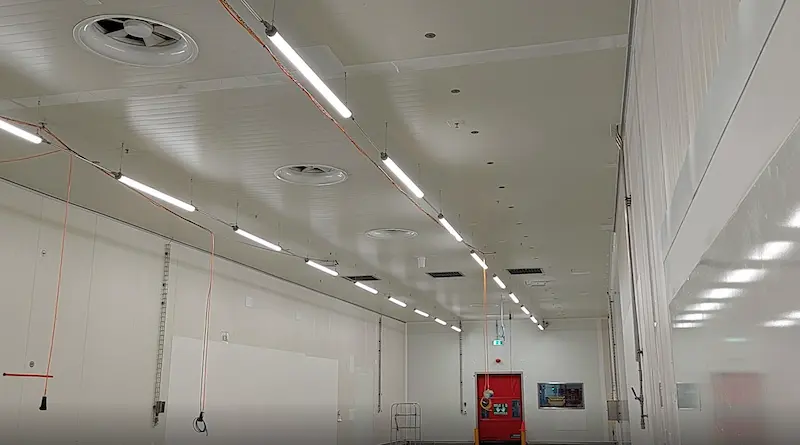
Hygienic Construction
Choose glass-free, shatter-resistant, smooth, and cleanable housings for food-handling areas.
Washdown Readiness
Match the IP rating and corrosion-resistant materials to the real cleaning routine.
Inspection Visibility
Specify color rendering and uniform distribution for accurate visual checks.
How Rancher IP69K Tri-Proof Lights Address Food Plant Lighting Requirements
Rancher is designed for wet, hygiene-critical applications where fixture sealing, cleanability, corrosion resistance, and visual quality must be considered together. Confirm the final configuration against the project specification and required documentation.
| Food Plant Requirement | Rancher Design Point | Practical Selection Value |
|---|---|---|
| Hygienic, shatter-resistant lighting | 3 mm PMMA/PC, glass-free housing with a smooth exterior | Helps reduce breakage-related contamination risk and supports routine cleaning. |
| High-pressure washdown resistance | IP69K protection for high-pressure water jets; source specification states 8,000–10,000 kPa and up to 85°C | Suited to areas with frequent, demanding washdown routines when the installed configuration matches site conditions. |
| Chemical and moisture resistance | 316L stainless-steel clips, screws, and hanging rings; PMMA/PC enclosure | Supports evaluation for humid areas exposed to chlorine-based sanitizers or acidic cleaners. |
| Inspection-grade visibility | CRI >90, 120° beam angle, high-transmittance cover, and 130–160 lm/W source efficacy | Helps deliver broad, more even task lighting for cutting, sorting, and inspection spaces. |
| Operating-cost control | Optional microwave sensor, 0–10V or DALI dimming, emergency function, and a 5-year warranty | Lets the lighting plan match occupancy, operating schedules, emergency requirements, and maintenance planning. |
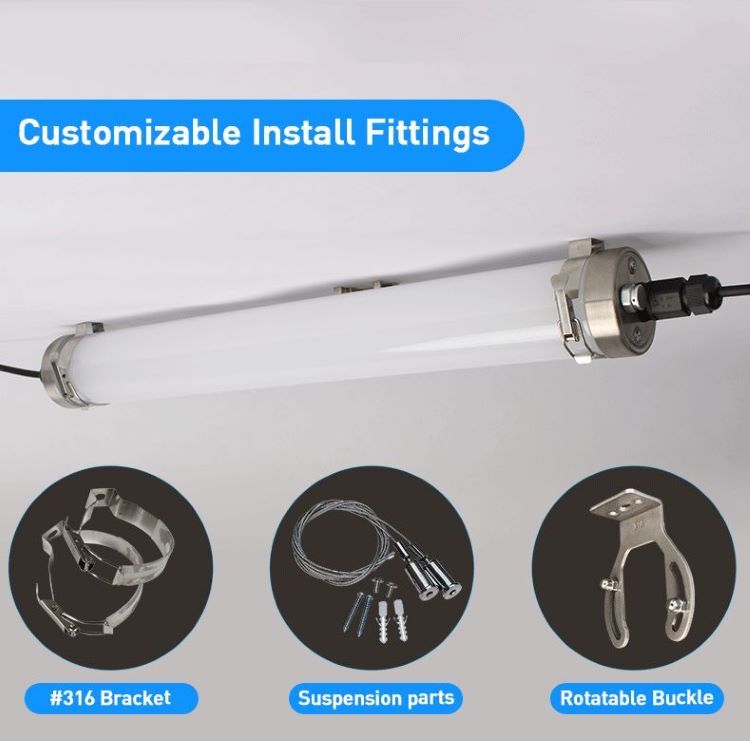
Installation and Temperature Planning
Rancher supports ceiling-mounted and suspension-mounted installation. Standard lengths are 600 mm, 1,200 mm, and 1,500 mm, with other lengths available for project discussion.
For cold rooms and freezers, verify the selected configuration against the required ambient temperature. The source specification identifies an operating range from −40°C to +40°C. For meat-inspection areas, confirm the applicable project or regulatory target light level; the source draft references 50–100 foot-candles (approximately 538–1,076 lux).
Related ShineLong Resources for Food Processing Lighting Projects
Use the product and application information below to align fixture selection with washdown, food-safety, and installation requirements.
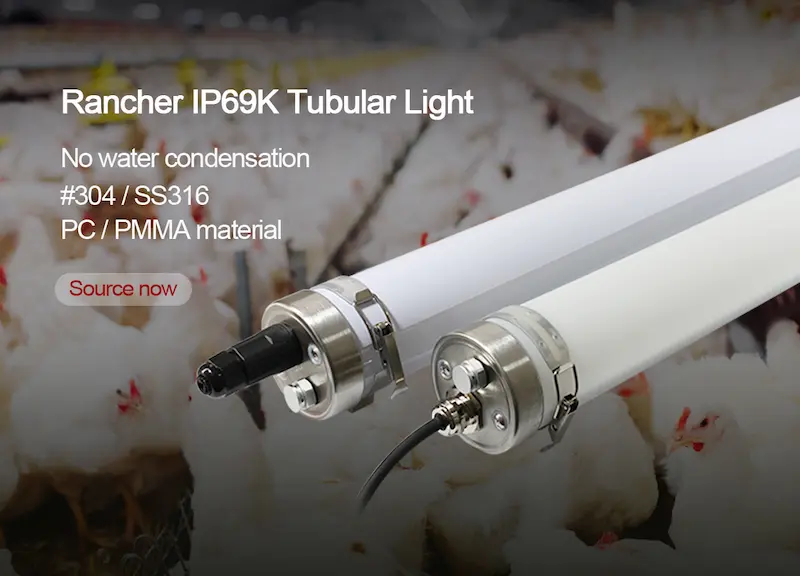
Rancher IP69K LED Tri-Proof Light
Explore the Rancher product series for food factories, slaughterhouses, washdown zones, and other harsh industrial environments.
View Rancher IP69K product details
Meat Processing Plant Lighting Support
Review application considerations for high-pressure washdowns, moisture, disinfectants, inspection areas, and production-line layouts.
Explore meat processing lighting