
Warehouse Lighting Standards Start With Safety and Visibility
Warehouses are material handling hubs, and lighting quality directly affects operational safety, work efficiency, and compliance risk. The original article explains that OSHA does not publish a standalone warehouse lighting standard, but OSHA workplace safety, emergency evacuation, and equipment-operation rules still shape practical warehouse lighting design.
In practice, warehouse projects often combine OSHA-related safety requirements with Illuminating Engineering Society (IES) illuminance recommendations, fixture protection ratings, and practical LED performance. For high ceiling storage and logistics spaces, warehouse high bay lighting and durable linear fixtures are commonly used to improve coverage and uniformity.

How Lighting Fixtures Meet OSHA-Related Warehouse Needs
Compliance directly drives real-world performance. Discover how our certified fixtures deliver on precision optics—lumens, efficacy, and beam angles—while integrating advanced safety protections, emergency modules, and smart sensing.

Luminous Flux and Efficacy
Luminous flux, measured in lumens, describes the total amount of light emitted by a fixture. Luminous efficacy, measured in lm/W, shows how much light is produced for each watt of energy consumed.
For example, a high-bay warehouse targeting about 200 lux may require a high bay light above 20,000 lm at mounting heights of 6 meters or more. For energy-efficient projects, best LED lighting for warehouses should balance output, distribution, glare, and wattage.
Installation Methods and Beam Angles
Installation method and beam angle directly affect lighting distribution and comfort. Ceiling mounting, chain suspension, brackets, and slots each change how light reaches racks, aisles, and work areas.
- High-bay warehouses: use warehouse pendant lights or high bay fixtures with narrow to medium beam angles of about 60 to 90 degrees.
- Dense shelving areas: use LED linear high bay fixtures with symmetrical or directional distribution to reduce rack shadows.
- Loading docks and aisles: use wide-beam fixtures around 120 degrees when broader floodlighting is needed.


Protection Ratings, Emergency Modules and Controls
In warehouses exposed to dust, moisture, corrosive gases, or impact risks, fixture structure is crucial. The original article recommends IP65 or above and IK08 or higher, especially where mechanical operations and collisions may occur.
- Emergency modules may include built-in lithium batteries, external power packs, or centralized controllers.
- Motion sensors help reduce unnecessary operating hours when aisles are empty.
- Daylight sensors adjust output based on natural light.
- Networked controls such as Zigbee, DALI, or Bluetooth can manage zones and provide records for inspections.
Common Industrial Lighting Fixtures for Warehouse Standards
Meet strict OSHA warehouse requirements without compromising on performance. ShineLong industrial lighting delivers the high visibility, rugged durability, and energy efficiency your facility demands.

High Bay LED Warehouse Lights
Suitable for high-ceiling storage, logistics centers, and open warehouse areas where sufficient lumen output and downward distribution are required.
View product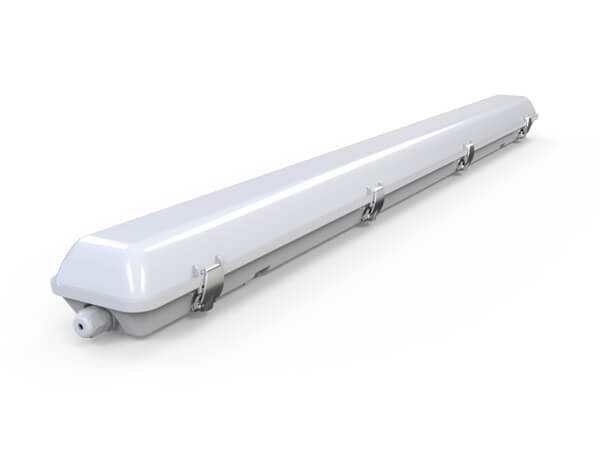
Alpha LED Tri-proof Light
Useful for aisles, loading docks, and harsh warehouse zones that need IP protection, linear coverage, and flexible suspension or mounting methods.
View product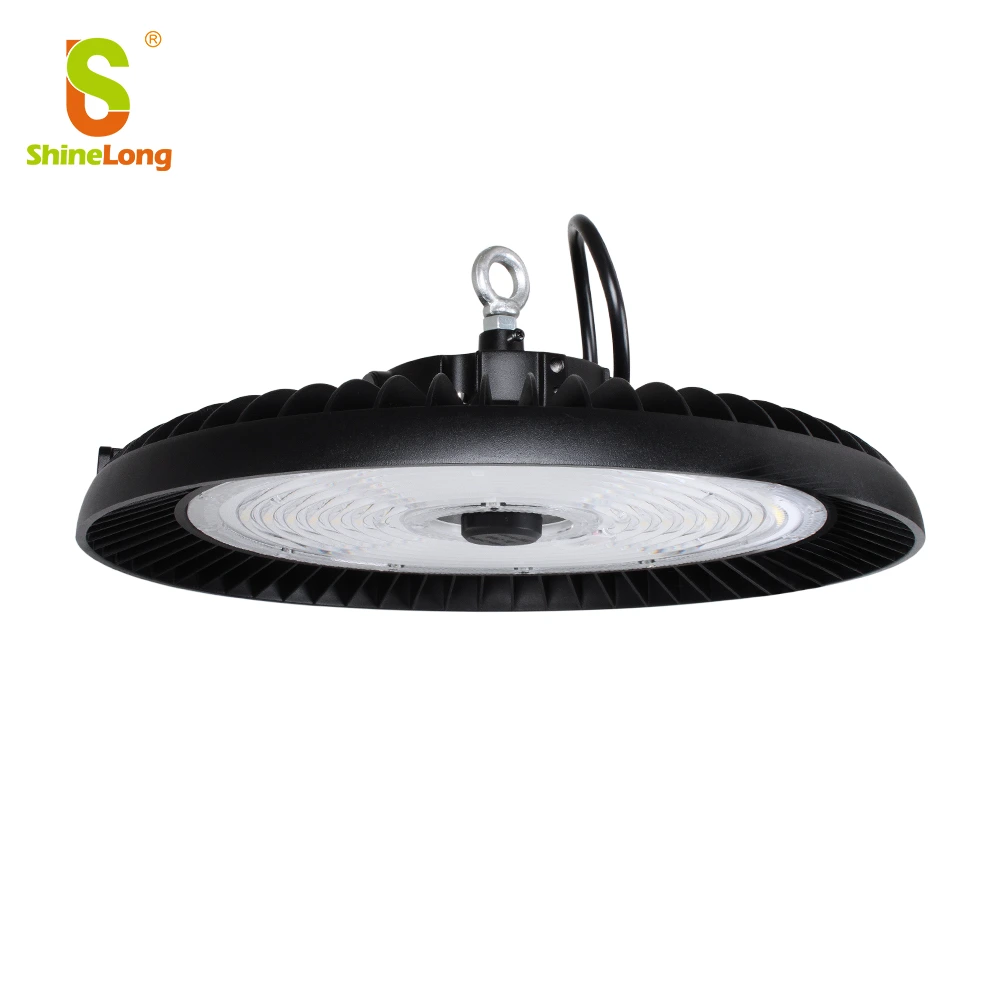
Industrial Lighting Series
For warehouses that require multiple fixture types, industrial lighting selection should consider lux target, mounting height, beam angle, controls, and certification.
View productFixture Recommendations by Warehouse Area
Check out our comprehensive zone-by-zone breakdown below to find the perfect fixture for every area of your warehouse. This clear format makes it easy to compare specs and select the right lighting for your space.

| Warehouse Area | Recommended Fixture Type | Why It Fits |
|---|---|---|
| High-bay open storage | UFO or linear high bay lights | High lumen output and focused downward distribution for ceilings of 6 meters or higher. |
| Dense shelving aisles | Linear high bay or linear tri-proof lights | More continuous light distribution helps reduce dark zones between tall racks. |
| Loading docks and transitional spaces | Tri-proof lights or wide-beam industrial fixtures | Improves uniformity where forklifts, pallets, and workers move in mixed directions. |
| Dusty, damp, or harsh areas | IP65+ industrial LED fixtures | Better sealing protects against dust, moisture, oil mist, and maintenance issues. |
| Inspection or packing zones | Higher-CRI LED fixtures with controlled glare | Supports visual checking, label reading, and worker comfort during repetitive tasks. |